The Role of Pets and Animal-Assisted Therapy in Dementia Care
29th April 2026
Pets and animal-assisted therapy (AAT) can support individuals living with dementia by easing anxiety and other mental health issues, improving overall mood and aiding communication.
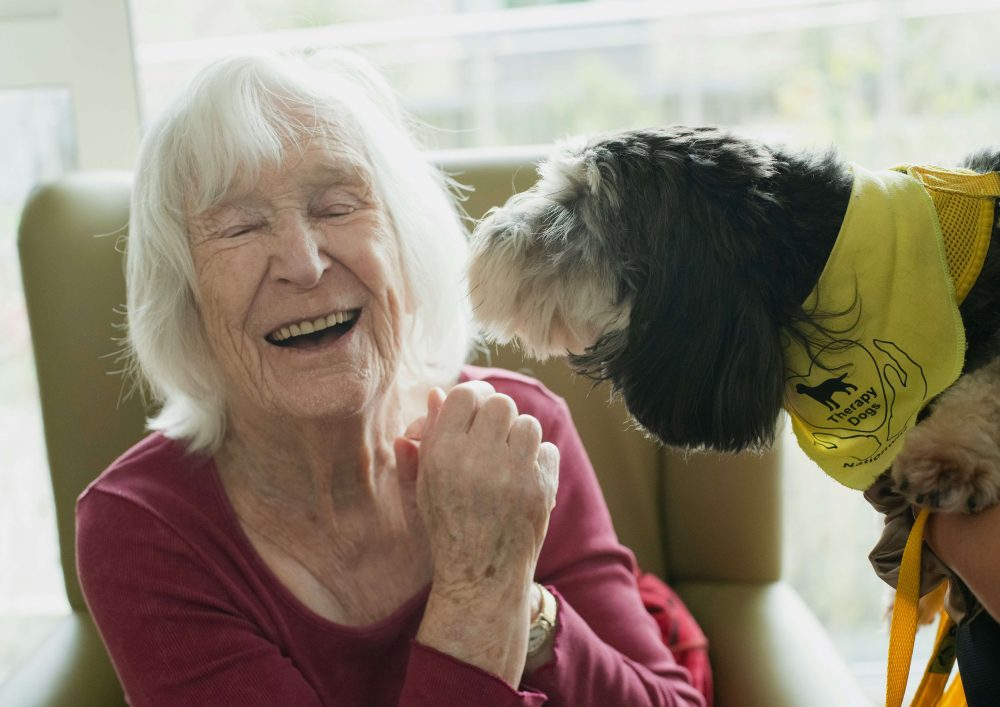
Since getting a pet is a lifelong commitment, many dementia residents, especially those receiving specialist dementia care in residential care homes, benefit from animal-assisted therapy, which includes regular visits from trained animals. These visits are important in supporting the value of routine for dementia residents and can provide emotional comfort, stimulate social interaction and improve overall wellbeing, ultimately offering feelings of unconditional love.
At The Bill House, we can support your loved one by increasing quality of life with specialist dementia care. Engaging with animals can enhance the mental health and wellbeing of your loved ones whilst reducing agitation, improving behaviour and enhancing non-verbal and non-judgemental connection.
What is animal-assisted therapy?
Animal-assisted therapy is used in individuals living with dementia because it is a goal-oriented, structured intervention which uses trained animals – typically dogs, but sometimes, cats and horses – to improve the emotional, cognitive and social, and physical benefits of your loved one living with dementia.
It is a common aspect of specialist dementia care and is one of the benefits of residential care, since animals offer unconditional companionship and allow patients to focus on something other than their condition.
The benefits of animal-assisted therapy
Animals can make a real difference in the life of someone living with dementia.
Animal-assisted therapy is used throughout the different stages of dementia and remains an important way of supporting your loved one through the later stages of dementia, because of its range of benefits.
Emotional and mental benefits
Interactions with pets and animals have extensive emotional and mental benefits, such as lowering cortisol levels, increasing oxytocin and improving emotional regulation, self-esteem and motivation.
By producing a relaxing effect, engaging with animals helps to reduce anxiety and agitation, including sundowning, decrease loneliness and promote social connection. Regular interactions with animals have immediate and long-lasting positive effects on the mental health and wellbeing of dementia residents.
Cognitive and social benefits
All types of interactions, including brushing or walking a therapy animal – which can coincide with nature-based therapy for dementia care programmes – can trigger memories of past pets, which fosters cognitive engagement and conversation. These simple, routine-focused tasks can improve attention span and sensory awareness.
Animal therapy encourages social interaction and helps with creating a community in residential care homes, provides a real sense of purpose and offers important cognitive stimulation, helping dementia patients maintain alertness. For dementia residents who struggle with verbal communication, emotional connections with animals can help these patients stay engaged and articulate thoughts and feelings without the need for words.
Physical benefits
Animal-assisted therapy in dementia care offers several physical benefits.
Activities like walking therapy dogs or grooming pets helps to improve mobility, flexibility and coordination whilst supporting pain management and enhanced functionality, assisting motor skills and strengthening muscles. By supporting overall physical health, your loved one living with dementia might experience better sleep, better balance and hand-eye coordination, and reduced physical complications.
How pets and animal-assisted therapy can support your loved one with dementia
Pets and animal-assisted therapy are extremely beneficial in the lives of individuals living with dementia and are important when considering how care homes can support independence for residents.
By implementing animal-assisted therapy as part of specialist dementia care, residents can benefit from improved self-esteem and confidence, better quality of life and stronger independence. If your loved one struggles to communicate, interacting with trained therapy animals help them to stay engaged and involved. Also, if your loved one previously had a pet, these animal interactions can help with storytelling and reminiscence.
The Bill House provides specialist dementia care
Finding the right care home for your loved one with dementia is an important part of navigating care with confidence for all families.
At The Bill House, we understand the importance of person-centred care and ensuring your loved one receives the support they need to feel calm, experience the best quality of life and have their care needs during the different stages of dementia met every day. We have therapy dogs visit our residents regularly and host a petting farm each year.
Contact us to learn more about our facilities and what to expect when moving into our care home.