The Importance of Dental Care for Dementia Residents
30th October 2026
Good dental care is critical for dementia residents because memory loss, physical changes and side effects from daily medications can dramatically increase their risk of serious dental health and mouth issues.
After a dementia diagnosis, your loved one can benefit from seeing a dentist so they can spot any problems that need treatment before it becomes too difficult for them to tolerate. As dementia progresses, a general dentist may no longer be able to manage your loved one’s treatment needs. At that point they can be referred to community or special care dentistry, which provides dental care for people with complex medical conditions.
Supporting dementia residents with personal hygiene goes further than bathing and dressing. Taking care of their dental health is essential because your loved one may find routine tasks like brushing their teeth harder to manage. This can lead to decay, pain, infection and tooth loss.
At The Bill House, we understand that the value of routine for dementia residents is crucial, and embedding effective dental care into this can be beneficial for your loved one. As a residential care home offering specialist dementia care, we are here to help you in navigating care with confidence for your loved one.
Signs of dental problems in your loved one
Dental health can change significantly as dementia progresses, with your loved one typically moving from independent maintenance to a heavy reliance on preventative planning and caregiver support. This is expected as the care needs during the different stages of dementia change and develop.
Some of the signs of dental problems in your loved one living with dementia can include:
- Reluctance to eat: your loved one may refuse meals, eat less or avoid hard foods because of toothache, sore gums or poorly fitted dentures. Nutrition and dementia are closely linked, with softer or blended foods better suited to dementia residents to prevent poor nutrition and dehydration.
- Difficulty sleeping at night: toothache, gum inflammation or infection can cause persistent discomfort that makes it difficult for your loved one to settle or stay asleep. Supporting better rest for your loved one means treating the cause, so it is worth arranging a dental check to rule out pain.
- Constantly touching or pulling at their face: your loved one may repeatedly rub their cheeks, hold their jaw or touch their mouth when experiencing dental pain, and since dementia impacts communication, these repetitive movements may be a way of expressing their pain or discomfort.
- Distress or agitation: if your loved one is in dental pain, they may become unusually irritable, call out, resist personal care or push someone away when they try to help with brushing. Specialist dementia care can help with supporting dementia residents through challenging behaviour like this.
If your loved one shows any of these signs, it’s important to seek support from a dentist or discuss a person-centred care plan with their residential care home, like The Bill House.
Ways to ensure good dental health for dementia residents
Many people living with dementia develop problems with their teeth and gums.
Looking after your loved one’s dental health is essential because poor oral hygiene can impact their comfort, nutrition and general wellbeing. Poor dental care can make chewing painful and eating unappealing, which can cause your loved one to withdraw from meals and lose weight.
Establish a consistent daily routine
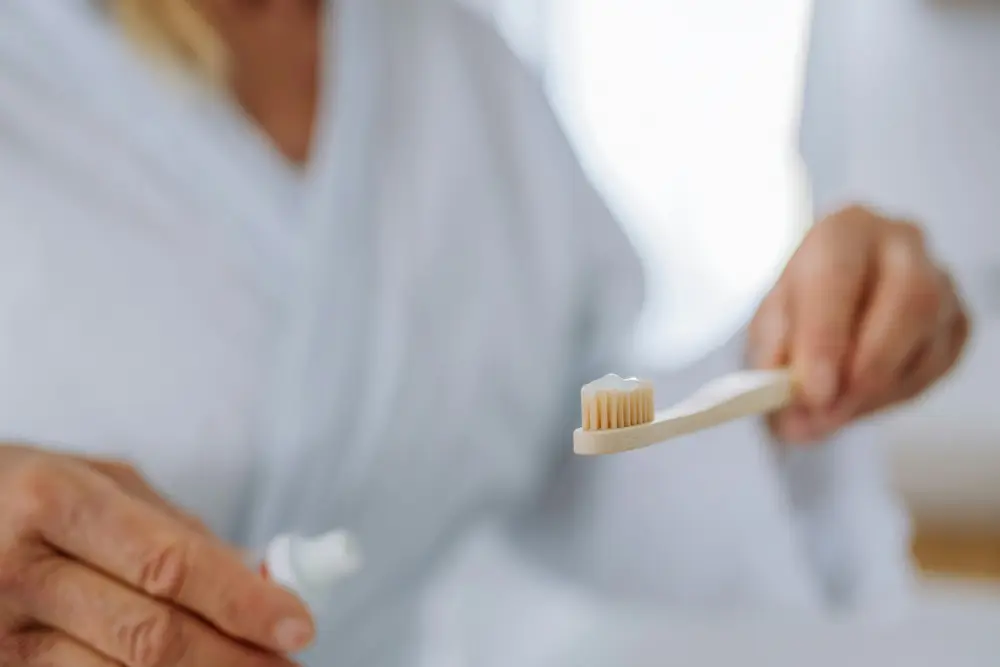
Brushing teeth twice daily, particularly before bed, helps remove plaque, reduce the risk of tooth decay and prevent gum disease.
Establishing a consistent routine which includes teeth brushing can help dementia residents become more familiar with the process and feel more comfortable with daily dental care. By providing gentle reminders or demonstrating each step, you can help your loved one maintain as much independence as possible whilst taking care of their teeth.
Use a fluoride toothpaste
Fluoride toothpaste helps strengthen tooth enamel and protect against decay, making it an important part of daily dental care for dementia residents.
Brushing can be supported with an appropriate fluoride toothpaste, using a small amount and encouraging your loved one to spit it out rather than rinse or swallow. If your loved one is struggling to brush their teeth independently, offering simple guidance or assistance can make a difference, whilst following advice from a dentist.
Adapt to changing needs
As dementia progresses, your loved one may begin to experience difficulties with memory, coordination, understanding instructions or tolerating oral care. This can cause their dental hygiene to change over time.
Adapting the approach to dental care can include using simple instructions, familiar toothbrushes, visual prompts or alternative brushing positions that make the process more comfortable for your loved one. Regular dental appointments can help identify any problems to ensure proper care is offered.
It’s important to support dementia residents where necessary with looking after their dental health. Care homes can support independence for residents who only require little guidance, for example, a simple reminder to brush their teeth, but a specialist residential care home can also provide closer support for those who struggle with physically brushing their teeth.
In a care home this should not be left to chance. NICE guidance asks homes to assess each resident’s mouth care needs when they move in, record those needs in their care plan and support them daily — including brushing twice a day with fluoride toothpaste, caring for dentures and taking them out overnight. If a resident does not have a dentist, the home should help them find one, and we also offer on site dentistry services.
The Bill House offers specialist dementia care
Spotting the signs of dental pain or discomfort in dementia residents can be difficult, but with the help of specialist staff from a residential care home, you can be confident in increasing quality of life with specialist dementia care for your loved one.
At The Bill House, we offer specialist dementia care that is tailored to the different types of dementia and the personal needs of our residents. From working alongside speech and language therapy to supporting dementia residents living with dysphagia, our carers are here to help your loved one.
Contact us to find out more about what to expect when moving into our care home and see how we can support your family.